

Topical Cream for Chronic Muscle Aches: What Works
Last Updated: November 11, 2026
Quick Summary
A topical cream for chronic muscle aches delivers a named active ingredient through the skin directly over the sore area, so relief stays local rather than spreading through the body. Look for an FDA OTC drug listing, a labeled active percentage, and a maximum daily application limit before you buy.
- Check the active ingredient and its percentage, the full inactive list, FDA OTC status, and maximum daily applications.
- Counterirritants like menthol and camphor distract from the ache but do not reduce inflammation.
- Apply a coin-sized amount to palm-sized areas and massage in circles for 30 seconds, up to three or four times daily.
- Wait at least 15 to 20 minutes before covering the area, and never combine the cream with a heating pad.
- Rotate application sites and track daily applications to lower the risk of contact dermatitis.
Table of Contents
- How a Topical Cream for Chronic Muscle Aches Actually Works
- Natural Pain Relief for Sore Muscles: What the Evidence Supports
- Topical Anti-Inflammatory Cream Ingredients to Check on the Label
- How to Apply Muscle Relief Cream for Better Absorption
- Frequently Asked Questions
How a Topical Cream for Chronic Muscle Aches Actually Works
A topical cream for chronic muscle aches delivers medicine through the skin directly over a sore muscle or joint, transdermal absorption. For a deeper explainer on how topical pain relief products actually work and which ingredients matter, see our full guide.
That localized action matters: a topical analgesic works where you put it, not in your stomach the way an oral pill does, which is why many people prefer it for ongoing soreness and stiffness.

Natural Pain Relief for Sore Muscles: What the Evidence Supports
Natural pain relief for sore muscles works best when the formula pairs a proven active with supporting botanicals at real, labeled percentages, not when it relies on fragrance alone.
- Juniper tar (cade oil), a botanical active recognized in OTC pain relief
- Menthol and camphor, common counterirritants that create cooling or warming
- Botanical oils such as basil, oregano and black pepper, listed by plant name
Check the label for a named active and its percentage before you trust the claim.
If you want a deeper look at how these formulas compare, see our guide to the best natural OTC cream for back and joint pain.
Topical Anti-Inflammatory Cream Ingredients to Check on the Label
Check four things on any topical anti-inflammatory cream label: the active ingredient and its percentage, the full inactive list, whether the product is an FDA OTC drug, and the maximum daily application frequency. That combination separates a regulated medicine from a wellness product.
FDA OTC status means the product is made under an official monograph and tested for identity, strength, and purity. Faeve's Kevo-Prophen™ is listed as an OTC monograph drug under M017.
What each active class actually does
- Counterirritants (menthol, camphor, methyl salicylate). These create a cooling or warming sensation that distracts from the ache; they do not reduce inflammation.
- Salicylates (methyl salicylate, trolamine salicylate). Absorbed through the skin, they act on prostaglandin pathways near the application site, similar to oral NSAIDs but at a much smaller systemic dose, which is also why they carry interaction warnings.
- Botanical actives (juniper tar/cade oil). Juniper tar is the botanical active in Kevo-Prophen™ at 1%.
The label checks that matter most
| What to check | Why it matters |
|---|---|
| Active ingredient and % | Confirms real medicine at a labeled dose, not scent |
| Full inactive list | Flags fragrances, preservatives, and alcohols that irritate sensitive skin |
| FDA OTC drug listing | Signals monograph testing and purity checks |
| Maximum daily applications | Prevents overuse, especially with salicylates |
| "External use only" and age limits | Most OTC analgesics are labeled for adults and children age 2 and older |
Drug interactions most labels bury
This is where most buying guides stop, and it is the part chronic-pain users most need. Topical salicylates are absorbed through the skin, so stacking a methyl salicylate cream with daily oral NSAIDs (ibuprofen, naproxen, aspirin) or with low-dose aspirin for heart protection can add to the total salicylate load.
- Oral NSAIDs plus topical salicylates. Ask a pharmacist before combining; the concern is additive effects on stomach lining and, rarely, on bleeding risk.
- Warfarin and other blood thinners. Topical salicylates and camphor have been associated with changes in anticoagulation in case reports. Tell your prescriber what you are rubbing in, not just what you swallow.
- Other skin treatments. Retinoids, exfoliating acids, and prescription steroid creams thin or irritate the skin barrier and can increase absorption of whatever you apply on top. Do not layer them on the same area.
One ingredient worth knowing by name is juniper tar. Read our full explainer on juniper tar oil as an active ingredient to see why it earns a place in the formula. And if the OTC label still feels unclear, our breakdown of what FDA OTC means for pain relief cream covers it plainly.
How to Apply Muscle Relief Cream for Better Absorption
Apply muscle relief cream to clean, dry skin and massage it in until it disappears, up to three or four times daily for adults and children age 2 and older. Rubbing it in warms the skin and helps the active ingredient absorb. For chronic aches, the technique matters as much as the ingredient, because you are applying it repeatedly for weeks or months, not once after a workout.
Prep the skin first
Pat the skin dry, do not rub, and apply while the area is still slightly warm. Avoid applying right after shaving, exfoliating, or sun exposure; compromised skin absorbs faster and stings more.
The application sequence
- Wash and dry the area, then warm it with a compress or shower if you have time.
- Use a small amount from the pump, about the size of a coin, for an area the size of your palm. More cream does not mean more relief; it means more irritation risk.
- Massage in a circular motion for 30 seconds, working from the center of the sore muscle outward toward its edges. This follows the direction of muscle fibers and moves fluid rather than just smearing product.
- Wash your hands after applying, and keep the cream away from eyes, lips, and broken skin.
- Wait before covering the area with clothing, a brace, or a heating pad. Occlusion increases absorption and the chance of a burn or rash.
Watch out: Applying a counterirritant and then immediately covering it with a heating pad or tight wrap is the most common cause of skin burns and blistering with OTC muscle creams. Wait at least 15 to 20 minutes, and never combine a topical analgesic with a heating pad on the same spot.
Build a long-term routine, not a one-off dose
Chronic muscle aches can mean regular use over time. A few habits to consider:
- Rotate application sites. Applying to the same patch of skin three or four times a day for months raises the risk of contact dermatitis. Move the application area slightly each day and give irritated skin a break.
- Track total daily applications. The label maximum exists for a reason. If you are reaching for the cream more than the labeled frequency, that is a signal to talk to a clinician about the underlying cause rather than to apply more.
- Watch for the early signs of skin reactions. Redness, itching, or a raised rash that appears after several days of use is more often cumulative irritation than an immediate allergy. Stop, let the skin settle, and reintroduce on a small area.
Ready to try it? Add the Kevo-Prophen pain relieving cream and apply as directed.
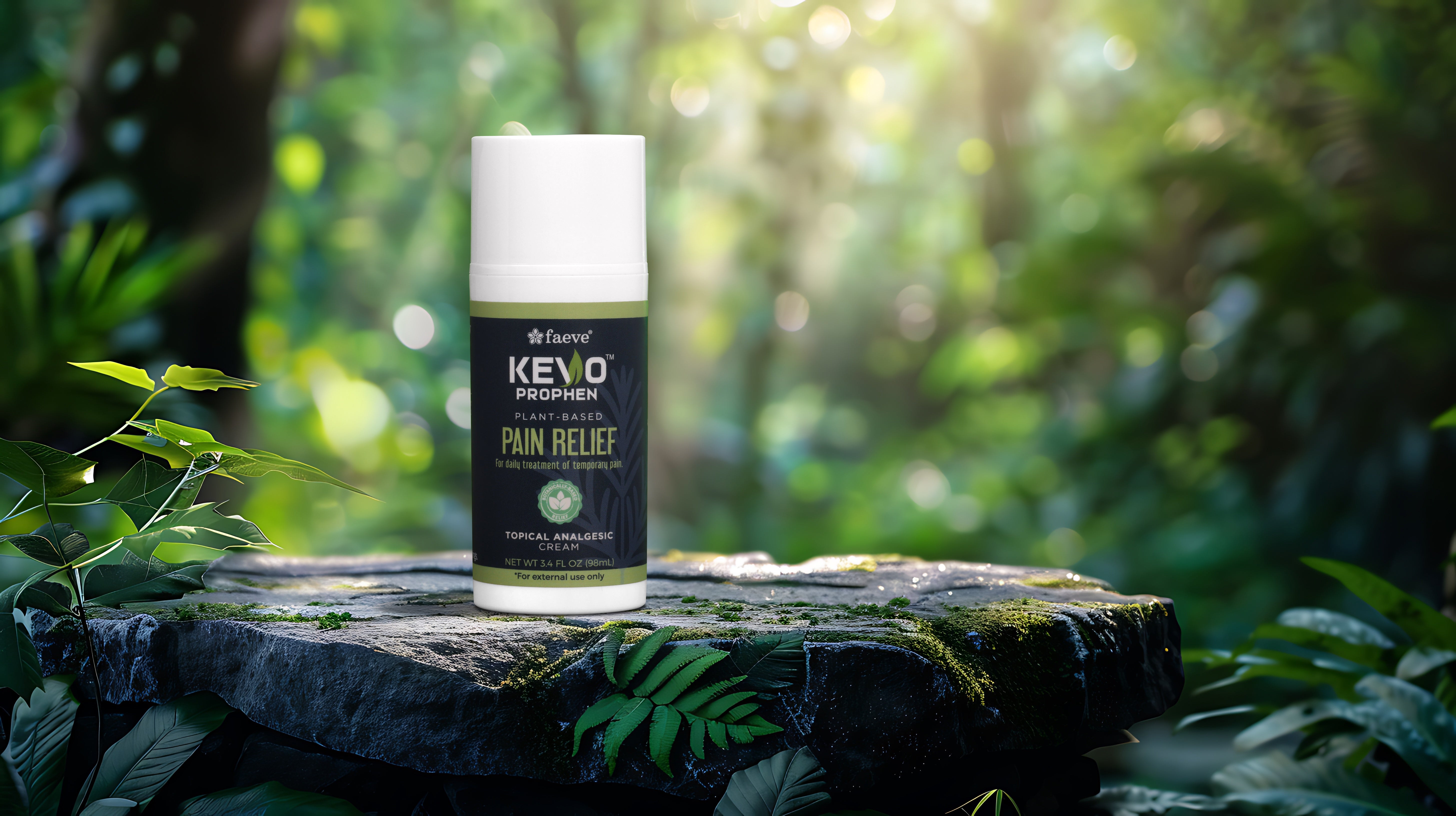
Chronic muscle aches rarely fade on their own, and guessing at drugstore creams wastes both money and time. Faeve makes that choice simpler with Kevo-Prophen™, an FDA-regulated OTC topical analgesic built on 1% juniper tar and a botanical base, independently patch-tested for skin tolerance. Apply it up to four times daily for targeted relief that stays where you need it.
Frequently Asked Questions
How often can you safely apply a topical cream for chronic muscle aches?
Follow the label directions for the specific product. Kevo-Prophen, for example, is labeled for adults and children 2 and older at no more than 3 to 4 times daily. Applying more often does not speed relief and raises the risk of skin irritation. If soreness persists past a few days of regular use, or if pain worsens, see a healthcare provider rather than increasing the frequency.
What ingredients should I look for in a topical anti-inflammatory cream?
Check the active ingredient and its percentage first, since that is what the FDA regulates the product to do. Common options include menthol, camphor, and botanical actives such as juniper tar. Then read the inactive list for carriers and plant oils. A label that names botanicals by their botanical name and states percentages is easier to evaluate than one that lists a proprietary blend.
Is there a difference between OTC and prescription topical pain creams?
Yes. OTC topical analgesics are sold under an FDA monograph, which sets the allowed active ingredients, strengths, and labeling. Prescription topicals can contain higher-strength or different actives, such as diclofenac, and require a clinician's oversight. For minor muscle and joint aches, an OTC product is the usual starting point; chronic or worsening pain warrants a medical evaluation.
